
Dunaj Family Office News
Igor Strehl on Austria’s Real Estate Market in 2026: A New Cycle After the Correction?
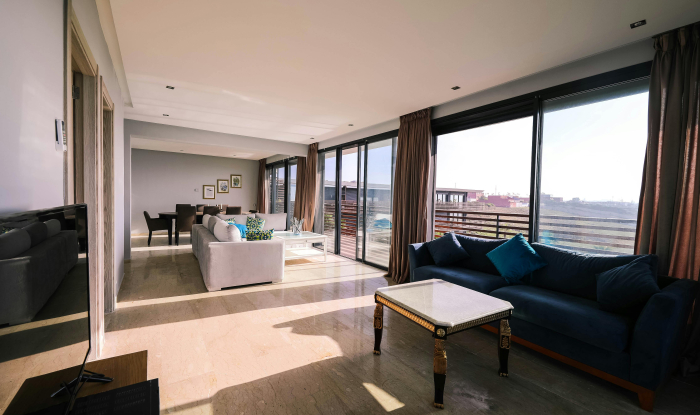
For the past two years, the Austrian real estate market has been rather uncomfortable for everyone involved. Rising interest rates, inflation, stricter lending conditions killed the momentum of the previous cycle. Many buyers disappeared. Sellers had to adjust expectations. In several regions, prices dropped noticeably from their peak levels.
Now, in spring 2026, the picture is changing again. Demand is picking up, transactions are rising and confidence of the market players is slowly returning. People are buying again. Transactions are up. The paralysis of 2023 and 2024 seems to be lifting.
Igor Strehl, founder and owner of Dunaj Family Office Consulting, has been watching this market closely for years. His take on this? "We're not going back to what it was. But that's not necessarily a bad thing."
First recovery signals are already visible
Demand for owner-occupied apartments has increased for two consecutive years. On the ImmoScout24 platform, search activity in 2025 ran about 17% above the previous year. Austria recorded around 91,000 real estate purchases in 2025, almost 9% more than in the year before. Residential acquisitions rose by nearly 21 percent.
In Vienna, the Zinshaus segment (multi-unit apartment buildings designed for long-term rental income) also showed renewed strength, with transaction volume crossing the one-billion-euro mark again for the first time since 2022.
All this suggests that buyers are returning to the market with greater confidence.
A healthier market after a meaningful reset
At the same time, the recovery doesn't automatically mean we are returning to the old environment. The changes are uneven and differ across regions. Let's take a look at Salzburg and Vienna. In the city of Mozart, prices for some residential assets fell by as much as 27%. Older apartments that had become almost unaffordable a few years ago are now back within reach for ordinary buyers. At the same time, Vienna remained relatively stable due to sustained demand and structural supply constraints.
The combination of regional diversity, improved affordability in selected sub-markets and more disciplined pricing has reopened parts of the market for buyers with a long-term perspective. For many households and investors, the math looks more reasonable again than it did in the last couple of years.
Blitz Interview with Igor Strehl
The market seems to be recovering. How do you read the current moment?
Igor Strehl: It's a reset more than a recovery, in my view. Price levels, financing assumptions and buyer behavior are all more disciplined today. That creates a more stable basis for investment decisions than we saw during the boom years. At the same time, recovery is present too. Demand is returning, transactions are increasing and confidence is gradually improving.
New construction is falling sharply. Why?
Igor Strehl:Developers are facing many challenges today. Construction costs increased significantly over the past years and remain high. Financing conditions are stricter, and banks require more equity and stronger pre-sales before committing to projects. At the same time, regulatory requirements have become more complex, especially in areas like energy efficiency and sustainability. The result is that fewer projects are getting started, particularly in Vienna.
And what does that mean for the market going forward?
Igor Strehl:The consequences are already visible. Even a moderate recovery in demand creates pressure when supply remains limited. In the rental market, existing properties are being rented out very quickly and competition among tenants is increasing. In the ownership market, buyers are competing for existing properties because there are fewer new projects in development. This dynamic leads to a tighter market overall. Demand is returning, while supply is not keeping pace. This imbalance supports price growth.
Is ownership becoming more realistic for average buyers again?
Igor Strehl: In some places, yes. Prices have come down, incomes have held up reasonably well, so the monthly payments feel more manageable. But the key constraint today is equity and financing structure. Many buyers can afford the monthly payments, but they struggle with upfront capital or meeting bank requirements.
What advice would you give to someone looking to invest in real estate in Austria in 2026?
Igor Strehl: I'd tell them to stop chasing the fancy newly constructed properties and look at the resale market. Existing properties, especially those with repositioning potential, can offer attractive opportunities because they are less exposed to construction risk and often priced more competitively. The most interesting opportunities are often not the most obvious ones. Places where prices have already adjusted, and properties people genuinely want to buy or rent, tend to be better investments than expensive new builds.
Igor Strehl on Austria's Real Estate Market